Local SEO guide / Dentistry
How Dentists Can Rank #1 in Local Search Results
Ranking #1 in local search as a dental practice comes down to five controllable signals: Google Business Profile (GBP) completeness, review velocity, NAP citation consistency, location-specific web pages, and structured data. No single tactic does it alone; all five work together to satisfy Google's three core local ranking factors: relevance, distance, and prominence. Local SEO for dentists follows the exact same framework every competitive local service business uses to own the Local Pack.
What makes dentistry a uniquely high-stakes vertical is search intent. A patient typing “dentist near me” is generally ready to book an appointment, not browse; industry research consistently shows local-intent queries like this carry higher conversion rates than broader searches. Capturing that click before a competitor does is the entire game. The sections below give you a prioritized, actionable playbook covering every signal Google weighs when deciding which dental practice fills those top three Local Pack spots.

THE LOCAL PACK / RELEVANCE • DISTANCE • PROMINENCE
THE PRACTICAL STARTING POINT
Five signals. One clearer Local Pack.
Local SEO works best when each signal reinforces the next. Start with the essentials below, then build the habit of maintaining them.
01 / Profile
Make your Google Business Profile complete.
Your Google Business Profile accounts for roughly 32% of Local Pack influence, according to industry local-search ranking factor analyses, and is the single largest signal you can control directly.
02 / Reviews
Build review velocity, not a one-time spike.
A steady flow of recent reviews outperforms a large, stagnant total. A consistent monthly cadence is the only review strategy that compounds over time.
03 / Accuracy
Keep your NAP consistent everywhere.
Mismatched name, address, or phone data across directories actively erodes your ranking potential. Clean data in fewer places beats messy data everywhere.
04 / Service pages
Give each local service its own page.
Procedure-plus-city pages reach patients your homepage alone cannot rank for. Match a real patient need to a real location.
05 / Structured data
Use Dentist schema to clarify the entity.
Using the Dentist schema type helps Google confirm exactly what your practice offers and where it operates.
WHY THIS MATTERS / Industry estimates suggest roughly 44% of local-intent dental clicks go to the Local Pack; organic links below the map capture about 29%.
01 / The ranking system
What does Google actually look at when ranking local businesses?
Google evaluates every local search result through three lenses: relevance, distance, and prominence. Relevance measures whether your GBP, website, and service list clearly match what the searcher typed. Distance measures how physically close your practice is to the person searching. Prominence reflects how well-known and trusted the broader web considers your business to be, based on reviews, mentions, and backlinks. All three interact with each other, and only one of them is essentially fixed: distance.
Relevance
Be explicit
Relevance is largely within your control through profile and content decisions. Your categories, services, and page-level copy must clearly match patient demand.
Distance
Be nearby
Distance measures how physically close your practice is to the person searching. It is the one core signal you cannot manufacture.
Prominence
Be trusted
Prominence is partly controllable: you can earn backlinks, directory mentions, and reviews, but you cannot fully dictate how external sources reference your practice.
Why relevance is the signal practices most often get wrong
Relevance isn’t about repeating the word “dentist” in every field on your profile. “Emergency dentist,” “pediatric dentist,” and “dental implants” each require distinct category signals, dedicated service listings, and page-level content. A practice that lists only its general services misses entire subsets of local searches. Consider a practical scenario: a parent searching “pediatric dentist near me” at 9 p.m. will not find your practice if the GBP doesn’t explicitly reflect pediatric services in its categories and service list. You have to tell Google what you do before Google can match you to the patient who needs it.
02 / Google Business Profile
How to set up a profile that actually ranks.
01 / Categories
Choose truth over reach
For a general dental clinic, the primary category should be Dentist. Secondary categories like Cosmetic Dentist, Orthodontist, Pediatric Dentist, and Emergency Dental Service should only appear if those services are genuinely offered. Overcrowding the category list with aspirational services dilutes your relevance signals rather than expanding them. Categories are not keyword fields; they are a declaration of what your practice actually does.
02 / Services
Close the gap with real detail
Build out your service list using patient-facing treatment names: “dental implants,” “teeth whitening,” “root canal treatment,” “emergency dental care.” Add short descriptions and pricing wherever you can provide accurate figures. For photos, cover the essentials: exterior and entrance, reception area, treatment rooms, and real photos of your team. Stock images send the wrong signal; authentic clinic photos build trust with both Google and prospective patients. For Posts, a realistic cadence is one or two per month, focused on new-patient information, appointment availability, and genuine practice updates.
03 / Maintenance
Keep the signal current
A GBP is not a one-time setup task. Hours, services, booking links, and categories need a quarterly check to stay accurate. Responding to every review, positive or negative, is a core part of profile health; it signals active management to Google and shows prospective patients that the practice is attentive. Practices that treat the GBP as a “set it and forget it” asset consistently lose ground to competitors who maintain theirs.
Photo checklist
Use authentic clinic photos rather than stock images: exterior and entrance, reception area, treatment rooms, and real photos of your team.
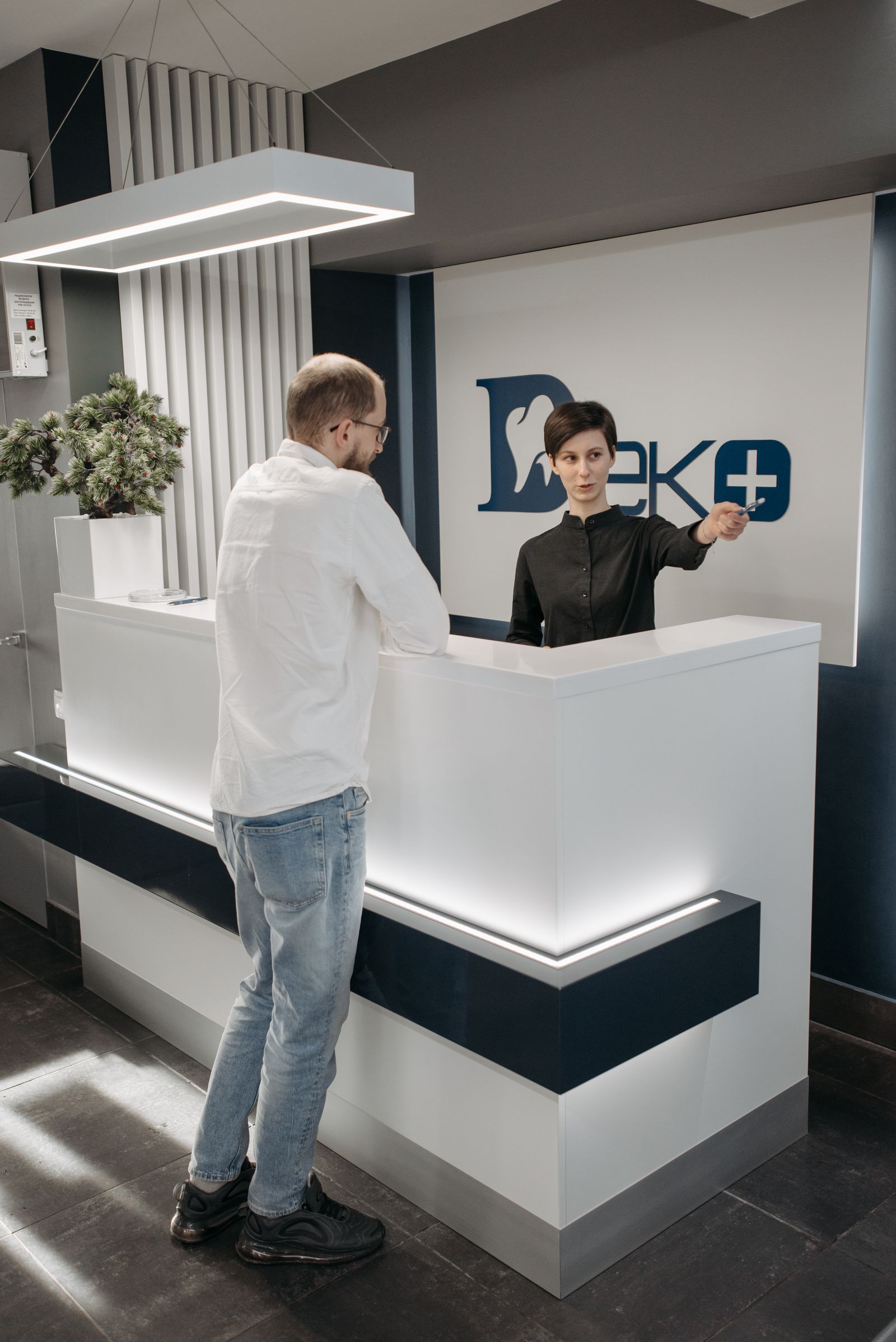
REAL-WORLD PROFILE SIGNAL / Use authentic photos of the experience patients can expect.
03 / Review benchmarks
How many reviews do you actually need to compete locally?
Based on directional leaderboard data from major Canadian urban centres, top-ranked dental practices in Toronto and Vancouver typically hold 150 to 300+ Google reviews, with market leaders sometimes exceeding that range. These benchmarks vary by neighbourhood and competitor set, so treat them as directional targets rather than fixed thresholds. A rating of 4.7 to 4.9 stars is the competitive target in most urban markets; dropping below 4.5 creates a measurable visibility disadvantage. In smaller Canadian cities, the bar is more accessible but the principle is identical.
MARKET BENCHMARK / USE AS A DIRECTIONAL TARGET
150–300+ reviews
Target 4.7–4.9★
Dense competition means patients have plenty of options. Build a steady review cadence, use accurate service categories, and keep your appointment path simple.
The compounding signal
Why review velocity beats total review count
This is the most underused insight in dental local SEO: a practice with 80 reviews receiving 8 new ones per month will often outperform a practice with 250 reviews that received none in the past six months. Google weighs recency heavily. A profile with months of review silence looks less active than one receiving steady, genuine feedback from real patients. Industry guidance generally targets 5 to 10 genuine patient reviews per month for a solo practice, with a floor of 4 to 6 new reviews monthly to maintain competitive visibility. Delivered consistently rather than in periodic bursts, that cadence compounds over time in a way a one-time push never can.
How this plays out in practice: a real-world parallel. Action Tire in Surrey, BC, has built over 500 five-star Google reviews through consistent, steady review generation after each service visit. Asking real customers for honest feedback after every interaction is exactly what keeps a local business visible in the Local Pack month after month. The approach works whether you run a tire shop or a dental practice. Review velocity is a universal local SEO lever, and the businesses winning the Local Pack in every category understand that.
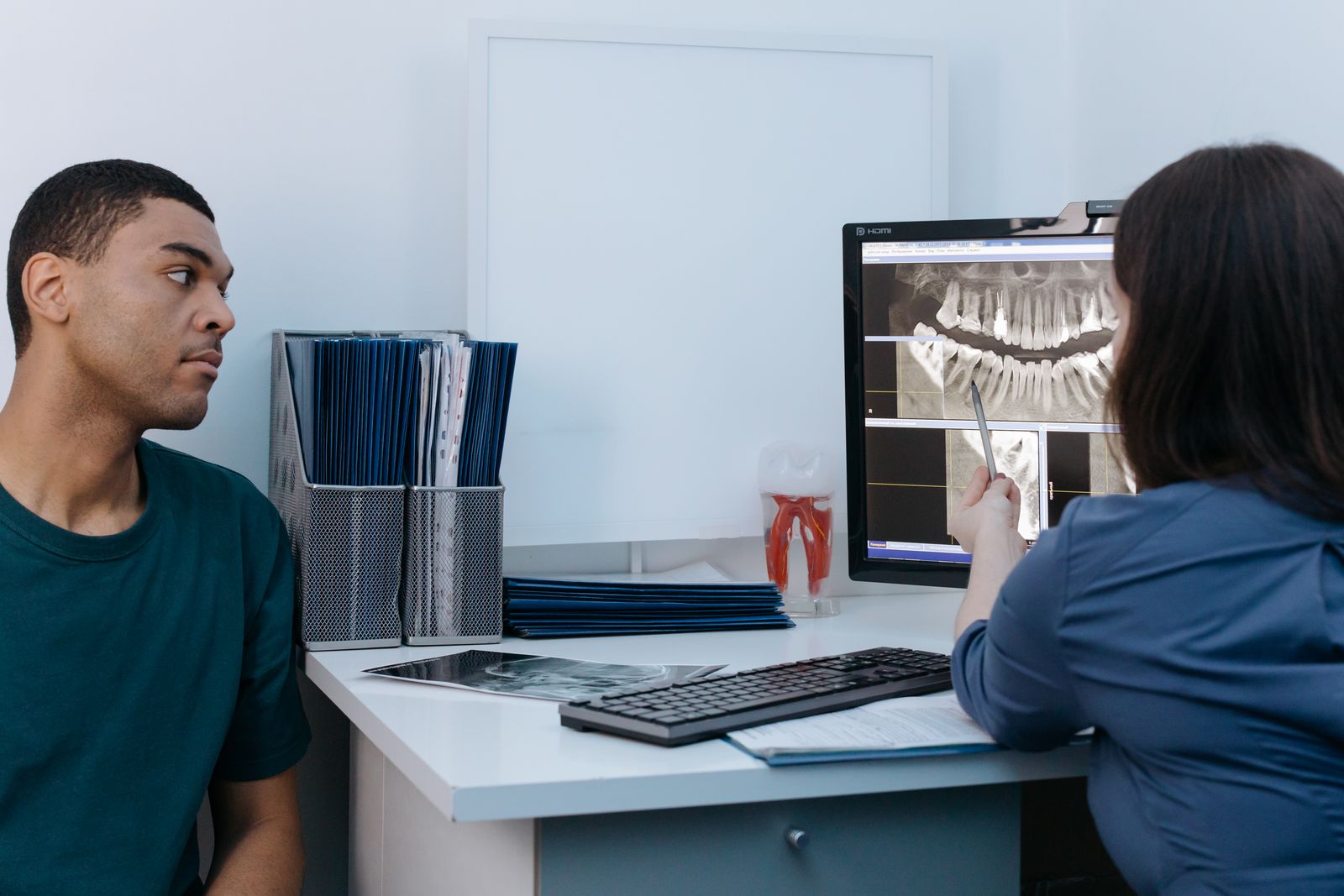
REVIEWS START WITH THE PATIENT EXPERIENCE / The useful moment happens before the review request.
04 / Foundation & measurement
Make clean data, useful pages, and real outcomes visible.
NAP / Citations
Why NAP consistency is still a foundational trust signal
NAP stands for name, address, and phone number. Inconsistencies across Google, Apple Maps, Bing, Yelp, healthcare directories, and dental-specific directories create conflicting entity signals that Google has to reconcile when determining which business to surface. A practice with a suite number listed differently across five directories is actively eroding its own relevance signal. Accuracy matters more than sheer volume of directory listings; clean data in fewer places outperforms messy data everywhere.
Website / Pages
What your website needs to contribute to local visibility
The website-side signals that feed Local Pack rankings include location-specific service pages (for example, “dental implants in Burnaby” or “emergency dentist in Surrey”), consistent NAP in the footer and contact page, and a clear appointment call to action. For structured data, use the Dentist schema type in JSON-LD rather than generic or broader types; it is more specific and more accurate for a standard dental clinic. Individual treatment pages should carry Service markup linked back to the main practice entity, helping Google understand the full scope of what your clinic offers at that specific location.
Metrics / GBP
How do you know if your local SEO is actually working?
GBP Insights tracks direction requests, phone call clicks, website clicks, and booking actions. These are the metrics that correlate most directly with new patient bookings, not impressions or keyword position alone. Set a weekly check-in routine: record profile views, call volume, and booking clicks as a baseline before making any changes, then measure movement after optimization work is completed. Without a baseline, you have no way to know whether a tactic actually moved the needle.
Local Pack vs. organic: understanding where your clicks are coming from
Industry estimates put the Local Pack at roughly 44% of clicks on local-intent dental searches, while organic links below the map capture around 29%. Being in the Local Pack is not a bonus outcome; it’s where the majority of local search traffic actually goes. Practices outside the Local Pack are competing for less than a third of the available clicks and doing so with far less intent-matched traffic. That framing alone makes a compelling case for treating local search optimization for your dental practice as a primary investment, not an afterthought.
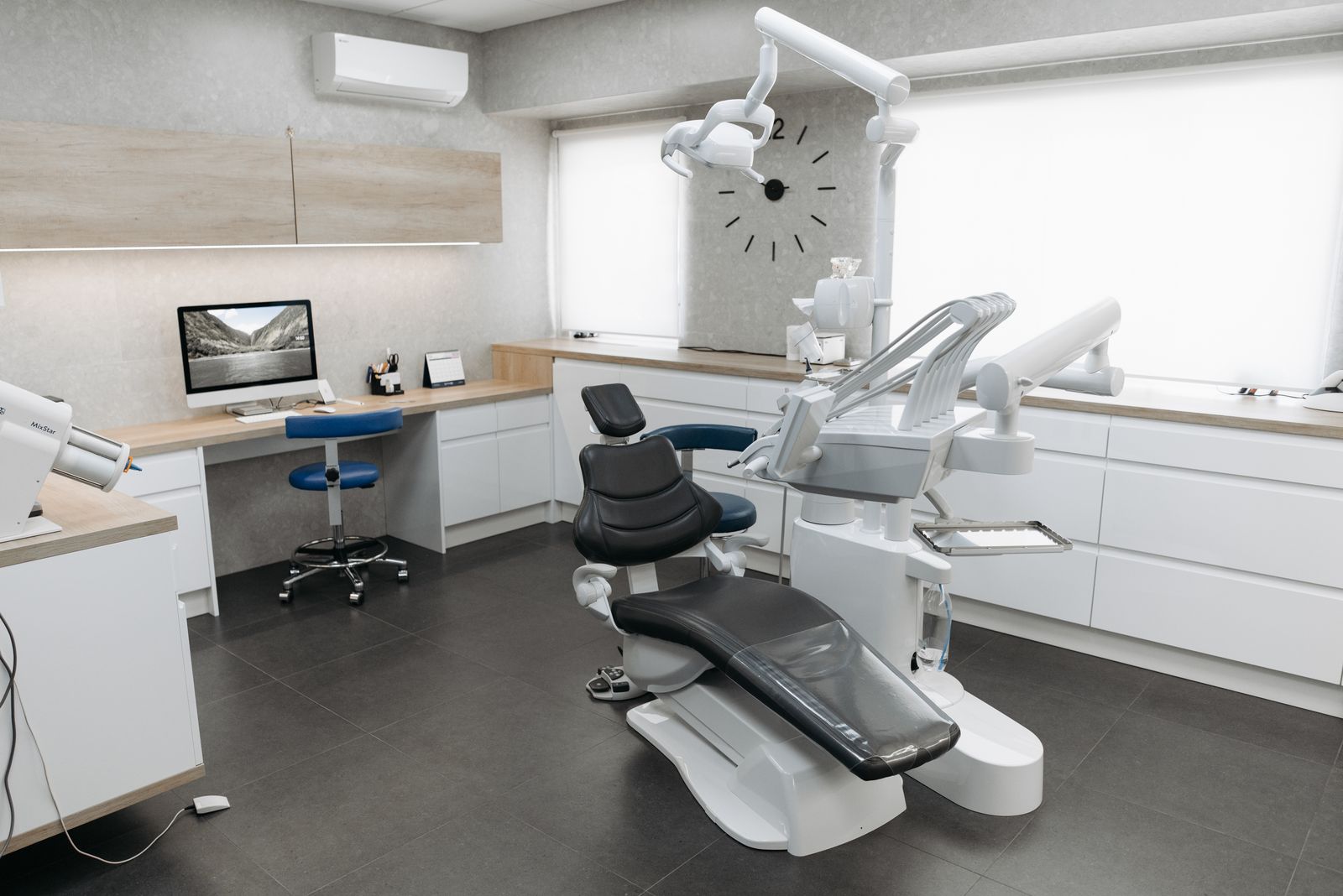
MAKE THE ENTITY LEGIBLE / Accurate business information should match the real-world practice.
05 / The playbook
Straightforward priorities. Consistent execution.
The five priorities are clear: a complete and accurate GBP, a consistent flow of genuine patient reviews, clean NAP data across directories, location-specific service pages, and properly implemented structured data. None of these require a large budget or a technical background to get started. Results typically become measurable within a few months of consistent effort, which means the sooner you establish your baseline and build your review cadence, the sooner you have data showing what’s working.
Dentistry is a high-value, highly competitive local service vertical in most Canadian markets. The same fundamentals that help a dental practice fill its appointment book are identical to what helps a tire shop or a physiotherapy clinic win the Local Pack in their category. Dental practice reputation management, citation hygiene, and GBP optimization are not niche tactics; they are local visibility strategy applied where it matters most. Start with the GBP, build your review cadence, and measure what moves. Every week you delay is a week a competitor is pulling ahead.
If you want to see what consistent local SEO for dentists looks like in practice, take a look at how Action Tire has approached it. That’s the same approach we take with every client we work with. Over nearly four decades of serving Surrey and the Greater Vancouver area, the shop has built its reputation one genuine customer interaction at a time, followed by honest feedback that shows up where it counts. Reach out to our team if you want to talk through what that kind of local presence looks like for your practice.
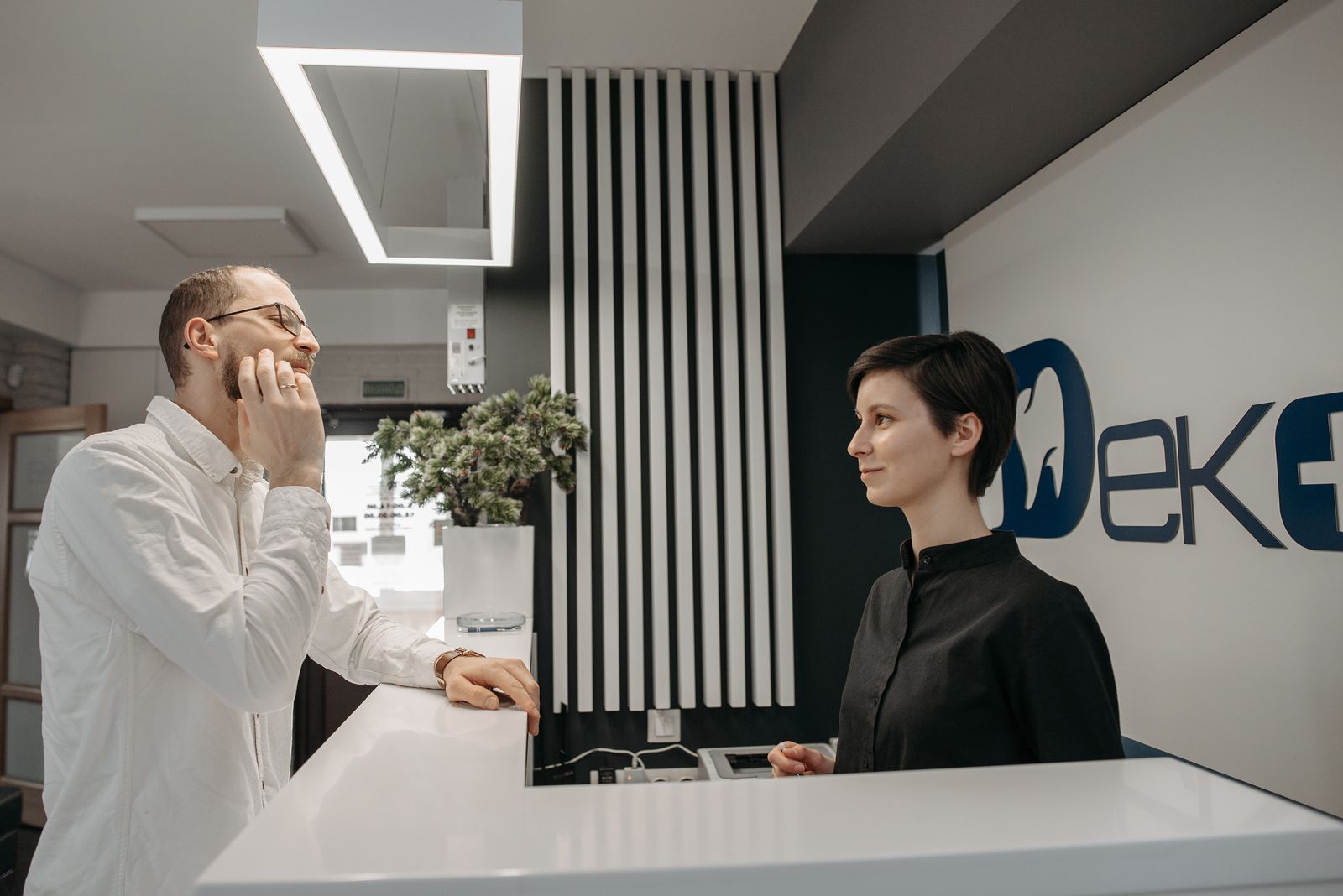
LOCAL SEO CONNECTS TO A REAL APPOINTMENT / Keep the next step clear from search to front desk.
Frequently asked questions
The practical details, answered.
01
How often should I update my Google Business Profile to keep it performing well?
You should check and update your Google Business Profile at least quarterly. Hours, services, booking links, and categories need a quarterly check to stay accurate, and responding to every review signals active management to Google.
02
Can I use stock photos on my Google Business Profile or should I use real clinic photos?
You should use authentic clinic photos rather than stock images. Stock images send the wrong signal; real photos of your exterior, entrance, reception, treatment rooms, and team build trust with both Google and prospective patients.
03
Is implementing structured data required, and which type should I use for a dental practice?
You should implement structured data using the Dentist schema type in JSON-LD. Dentist schema is more specific and accurate for a standard dental clinic than generic LocalBusiness or MedicalBusiness types, and individual treatment pages should carry Service markup linked to the main practice entity.
04
How long will it take to see measurable results from local SEO work for my dental practice?
Results typically become measurable within a few months of consistent effort. Establish a baseline for GBP views, calls, and booking clicks, then measure movement after optimization work is completed to see what actually moved the needle.
05
Should I prioritize getting listed in lots of directories or focus on accuracy of my NAP information?
You should prioritize NAP accuracy over sheer volume of directory listings. Clean data in fewer places outperforms messy data everywhere, because inconsistencies across directories actively erode your relevance signal.